.png)
Our Brains are (Not) Shrinking
Written by Nhat Minh Nguyen

The cover image of this essay seems like nonsense. For those unfamiliar, ‘Our Brains Are Shrinking’ is a satirical critique of the ‘brainrot’ that has taken over teens’ social media. ‘67’, ‘babyboo’, ‘chopped chin’, and ‘skibidi’: do these terms represent a degradation of our modern cultural standards, or are they just a new expression of art? Is ‘brainrot’ a new generation of abstract art and communication?
Throughout history, abstract art has been viewed as nonsensical and generally received poorly. Those who thought so saw abstract art as representing nothing of worth and, therefore, dismissed it.

For example, Marcel Duchamp’s “Fountain” in 1917 depicted a white porcelain urinal. It was thought to be a perversion of art, representing nothing of value and was rejected by the artistic conservative establishment. Their rejection of Duchamp’s art did not discredit it, but rather gave it meaning. This urinal that seemingly represents nothing became a symbol of protest, pushing the boundaries of what constitutes art and encouraging people to look at art through the lens of their personal interpretation rather than through rigid expectations.
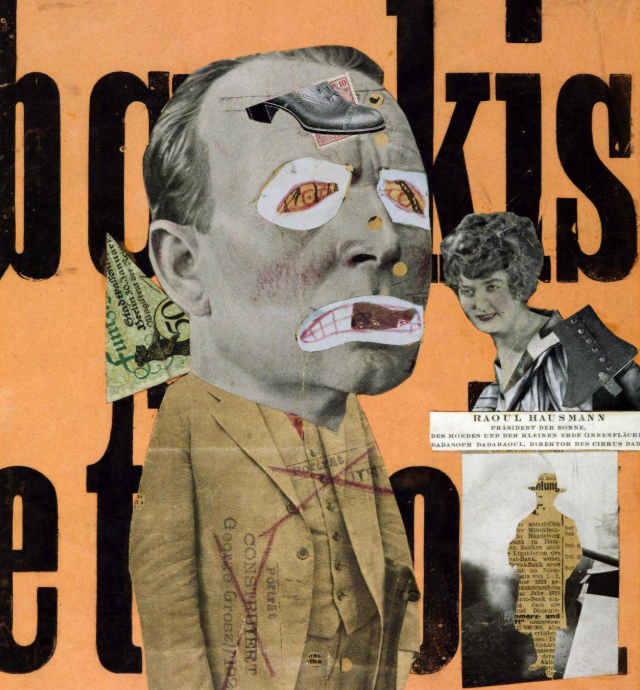
Other art movements in history have also thrived on conveying ‘nothingness’. The art movement Dada has its roots in anti-war, anti-bourgeoisie, anti-nationalist culture and emerged in the First World War. It also seeks to portray seemingly nonsense; it is irrational art that means nothing to the passing eye. However, it used humour and this very nonsense to critique the world order at the time. Thus, Dada was known as the ‘anti-art’ art movement.
There are so many other examples of ‘nonsense’ art—art that went against the grain. We know that this type of art is not new, it has roots many decades ago. This begs the question, what is art if not the product of its creators?

Herein comes ‘brainrot’. It is fundamentally a movement that has come out of social media by
a group of people without coordination. People have created these sensations out of nothing, but not without meaning. For example, ‘67’ baffles adults. But that is the whole point. ‘67’ is something that only makes sense to the young generation and is an act of rebellion against older generations. Interestingly, it has also transcended cultural boundaries globally. For example, here at BIS, we are an international school based in Vietnam and populated by dozens of nationalities, yet every student here has somewhat fallen for ‘67’. The fact is that ‘67’ is one of few international phenomena that has no dominant cultural affiliation as it has been adapted to fit so many people worldwide. Is this not a beautiful example of global cultural exchange?

Let’s take another example: the use of images in social media comment sections. Specifically, let’s look at ‘Jimmy Butler looking at paper’. Does it look like nonsense? Yes, kind of. But it is used to convey opinions. In fact, this type of communication is actually quite sophisticated by using edited images to euphemistically convey meaning while being vague for interpretation. This is a staple of teenage communication and should be accepted as a natural development of interaction in the digital age.
Art is rebellious and pioneering. ‘Brainrot’ is rebellious and pioneering. Everything new will be shunned until it becomes mainstream. There is nothing about ‘brainrot’ that suggests that this new generation is becoming dumber, just like how 20th century modern art didn’t result in mankind’s regression. Therefore, ‘brainrot’ is not senseless but a collective expression of art from millions of people who now have super-connected lives from the internet.
So, no, our brains are not shrinking.
References and image sources:



Comments